

Celebrities Who Have Publicly Shared Their EMDR Experiences — And What It Means for All of Us
EMDR therapy has been around since the late 1980s. But nothing put it on the cultural map quite like a string of high-profile celebrities openly sharing that it changed — or in some cases saved — their lives.
When public figures speak honestly about their own therapy journey, the stigma shifts. Not only do we begin to feel closer to someone in the public eye once we can relate to their struggles, but effective means of creating change feel more accessible.
Here are three of the most prominent voices who have brought EMDR into public conversation.
Prince Harry
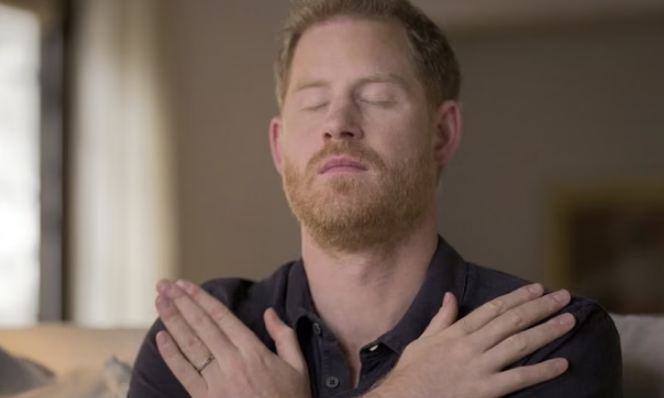
No celebrity has done more to bring EMDR into mainstream awareness than Prince Harry. In the 2021 Apple TV+ docuseries The Me You Can't See, co-created with Oprah Winfrey, Harry was filmed during an actual EMDR session — doing bilateral butterfly tapping with therapist Sanja Oakley as he processed grief and anxiety connected to the death of his mother, Princess Diana.
The image of the Duke of Sussex sitting with his eyes closed, hands crossed in the butterfly tap position, was broadcast around the world. For many people, it was the first time they'd seen EMDR demonstrated.
Harry spoke candidly about the lasting impact of unresolved grief — and about what it took to finally face it. "One of the biggest lessons that I've ever learned in life is you've sometimes got to go back and to deal with really uncomfortable situations and be able to process it in order to be able to heal," he said.
He also described how anxiety around returning to London — particularly for his grandfather's funeral — had followed him for years. "For most of my life I've always felt worried, concerned, a little bit tense and uptight when I fly back to the UK, when I fly back into London," he shared. EMDR helped him begin to process what years of not talking about it hadn't touched.
You can watch a clip of Harry’s conversation with Oprah on Youtube here.
You can watch a clip of Harry actually doing EMDR with his therapist here.
Sandra Bullock
Sandra Bullock's EMDR story began after a series of traumatic events collided — a venomous spider bite, her son's grand mal seizure, and most significantly, a fan breaking into her home. The cumulative trauma led to PTSD and alopecia. It also led her to try EMDR.
Bullock spoke about her experience on Red Table Talk with Jada Pinkett Smith, Willow Smith, and Adrienne Banfield-Norris — describing what happened when she entered the session holding bilateral paddles and revisited the break-in in detail.
"The break-in happens and I discover something called EMDR therapy, which was the most healing… I was so scared to do it," she told the hosts.
What she didn't expect was where the session took her. "I was in the closet and I heard banging on the door and he said 'ok hold that feeling.' After about two hours-worth I realised I had gone on this entire journey inside my house but all of a sudden it went to unsafe relationships, unsafe childhood moments. I realised I have surrounded myself often with unsafe people and situations and put myself there because that was the most familiar feeling I had. In that EMDR journey I had to take ownership of everything that I brought into my world because it felt comfortable and realise it no longer had a place."
This is one of the most honest and vivid public descriptions of how EMDR actually works — the way a single traumatic event can become a doorway into earlier, related experiences that have been shaping behavior beneath conscious awareness.
You can watch a clip of Sandra Bullock discussing this at the Red Table Talk here.
Miley Cyrus
Miley Cyrus's EMDR story is the most recent and may be the most resonant for a generation that grew up watching her navigate fame from childhood.
In a 2025 interview with The New York Times, Cyrus spoke about the therapy she said had saved her life. "Love it. Saved my life. I've never had stage fright again. Ever," she told the Times.
She described a session in which she was guided to imagine herself on a train. Her therapist asked what feeling of anxiety came up when performing. Without thinking, she said: "I just want them to love me so bad." The train then began moving backwards through time — surfacing not just her own pain, but what she recognized as intergenerational trauma she was carrying from her mother's story.
"My body remembers it in a much deeper way than my brain does," she said — a statement that captures something EMDR therapists have understood for decades.
The session ended with a healing visualization on a snowy Montana mountaintop, surrounded by everyone who had brought her love: her dog, her grandmother, her mother, her boyfriend. The stage fright never came back.
You can watch the full interview on YouTube here.
What These Stories Have in Common
Three very different people, three very different traumas — grief, PTSD, performance anxiety, intergenerational pain. Yet the same therapy reached all of them in ways that years of other approaches hadn't.
You don't have to have experienced something "big enough" to benefit. Bullock's therapist helped her see that unsafe patterns had roots in ordinary childhood moments. Cyrus found intergenerational grief in a session about stage fright. Harry processed two decades of unspoken loss through bilateral tapping.
The experiences that shape us most aren't always the ones that make the headlines. Sometimes they're the quieter ones — the moments of not being held, not being seen, not feeling safe enough to need anything. EMDR reaches those too.
As an EMDR therapist in Carmel, I work with women throughout the Monterey Peninsula — Monterey, Pacific Grove, Pebble Beach, and Big Sur — who are ready to stop carrying what no longer needs to be carried. In-person sessions in Carmel, telehealth throughout California and Idaho. Book a free consult here.
This blog is for educational purposes only and is not a substitute for professional medical or psychological advice, diagnosis, or treatment. Ashley K. Whelan is a Licensed Professional Clinical Counselor (LPCC #11188) in California specializing in EMDR, somatic therapy, and nervous system regulation for women in Carmel and the Monterey Peninsula. Telehealth available throughout California and Idaho.