

What Is Microdosing — And Why So Many People Are Doing It
Psychedelic medicine is having a cultural moment. But for many people, the idea of a full journey — surrendering to an experience that could last one to six hours and take you completely outside of ordinary reality — feels like too much. Too intense, too unpredictable, too big of a leap. The experiences can feel challenging to schedule and take time off for when life is currently life’ing and feeling really full.
Microdosing offers a different entry point. And it's why so many people who are curious about psychedelics but not ready or available for a full experience are starting there.
What Microdosing Actually Is
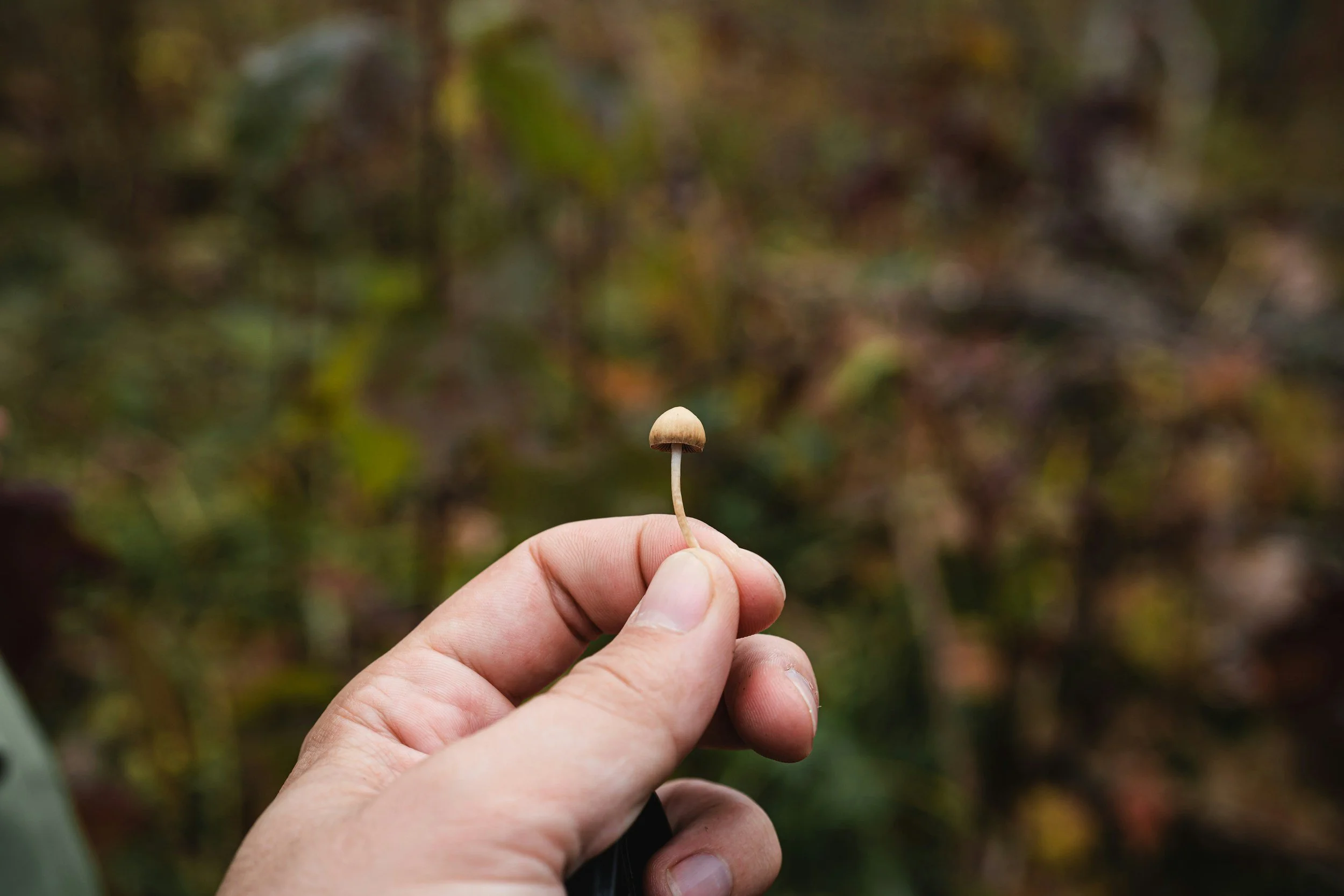
Micro-dosing means taking a sub-perceptual dose of a psychedelic substance — typically psilocybin or LSD — on a regular schedule, usually every two to three days. Sub-perceptual means the dose is small enough that you don't experience a psychedelic effect. You're not seeing visuals, you're not altered, you can go to work, have conversations, move through your day normally.
What people report instead is subtler: a slight lift in mood, more creative thinking, reduced anxiety, greater emotional openness, more presence. Some describe feeling like a slightly better version of themselves — more patient, more curious, less reactive — without being able to point to exactly why.
The most commonly used substances for microdosing are psilocybin (magic mushrooms) and LSD, though some people also microdose with other compounds. It's worth noting that psilocybin remains a Schedule I substance federally and is only legally available for therapeutic use in Oregon and Colorado at this time. LSD (lysergic acid diethylamide) also remains a Schedule I controlled substance federally with no currently legal therapeutic framework in the United States, though research trials are underway.
What Full-Dose Experiences Do — The Skiing Analogy
To understand why micro-dosing is interesting, it helps to understand what larger doses do — and why people find them so transformative.
At full doses, psychedelics temporarily quiet the default mode network — the part of the brain responsible for self-referential thinking, rumination, the inner critic, and the rigid patterns of thought that define how we see ourselves and the world. When the default mode network goes offline, the usual grooves of the mind stop running. The habitual loops, the fixed beliefs, the well-worn paths of thinking that you travel without even noticing — they pause.
Think of it like a ski slope after a heavy snowfall. Before the storm, the mountain is covered in tracks — grooves worn deep by the same runs taken over and over. It's hard to go anywhere new because the skis just slide back into the existing paths. But after fresh snow? The whole mountain opens up. You get to choose where to go. The tracks aren't there yet. You can carve something new.
That's what a full psychedelic experience can feel like — a reset that gives you fresh snow to work with. A temporary suspension of the default patterns that allows something genuinely different to emerge.
This is why people return from full journeys describing profound shifts in perspective, relief from depression that had been treatment-resistant for years, or a felt sense of okayness they hadn't accessed before. The medicine created the conditions. The integration work — ideally done with a therapist — is what turns that opening into lasting change.
What Microdosing Does Instead
Micro-dosing doesn't take you to fresh snow. It doesn't suspend the default mode network or produce altered states. What it does, according to a growing body of research and a large community of people who do it, is create a gentle loosening — a slight reduction in the rigidity of those existing tracks without erasing them entirely.
Think of it as warming the snow just enough that the skis move a little more freely. You're still on the same mountain. You're still you. But there's slightly more flexibility, slightly more openness, slightly less automatic pull toward the same worn paths.
For many people this translates as: less inner critic, more creative flow, more emotional availability, reduced anxiety, a greater sense of being present in their own life. The effects are cumulative rather than immediate — most people microdose on a protocol over several weeks and notice the shifts gradually.
What Pairs Well With Microdosing
The research and the community are increasingly aligned on this: microdosing works best when it's paired with intentional practices that support integration and nervous system regulation.
Meditation — the slightly heightened neuroplasticity that microdosing may produce makes meditation more accessible and more effective for many people. Sitting with what arises feels less effortful.
Movement and yoga — embodiment practices help the nervous system process and integrate what the microdose is gently loosening. Getting into the body while the mind is slightly softer can be genuinely powerful.
Journaling — capturing what comes up during microdose days — insights, emotions, patterns noticed — creates a thread of awareness that builds over time and is enormously useful in therapy.
Psychedelic integration therapy — working with a therapist during a microdosing protocol helps you make meaning of what's shifting, address what surfaces, and ensure the process is moving in a direction that serves your healing rather than just producing pleasant effects. Learn more about somatic psychedelic integration →
A Note on Legality and Safety
Psilocybin is currently legal for therapeutic use in Oregon and Colorado. LSD remains federally illegal in the US.
As with any psychedelic practice, set and setting matter. Microdosing is not appropriate for everyone — people with personal or family history of psychosis or certain other mental health conditions should approach with significant caution and consult a medical provider.
If you're exploring microdosing and want support making sense of what's shifting, or if you've had experiences — with microdoses or otherwise — that feel incomplete or unresolved, psychedelic integration therapy can provide the container to do that work properly.
As a somatic therapist in Carmel-by-the-Sea offering psychedelic integration support throughout the Monterey Peninsula — Monterey, Pacific Grove, Pebble Beach, and Big Sur — I work with people navigating this territory thoughtfully. Telehealth available throughout California and Idaho. Book a free consult here.
This blog is for educational purposes only and does not constitute medical advice or encouragement to use controlled substances. Psilocybin is a Schedule I substance federally and is only legally available for therapeutic use in Oregon and Colorado. LSD (lysergic acid diethylamide) also remains a Schedule I controlled substance federally with no currently legal therapeutic framework in the United States, though research trials are underway. Ashley K. Whelan is a Licensed Professional Clinical Counselor (LPCC #11188) in California that helps people integrate a variety of psychedelic experiences for improved mental health outcomes. This post is intended for informational and educational purposes only.